
Say a number finally comes back that everybody agrees is fair. Then somebody mentions the hospital has a lien. Then your health insurer wants to be paid back for what it covered. Then there's the attorney's fee. And you're sitting there doing the math in your head going, wait, how do I get any money after all that?
That's the right question, and it's better asked now than at the end. The number an insurance company agrees to pay and the number that lands in your account are two different numbers. Taxes, hospital liens and reimbursement claims all come out of the space in between. So this chapter is about closing that gap before you sign, not finding it afterward.
How settlements are taxed
I'm not a tax professional and I'm not a CPA. But I do know a little bit about this. The general rule of thumb is that if you're compensated for a physical injury in a settlement, in Texas and other states, usually that's not taxable. Those damage awards are typically tax free.
There are some exceptions. Portions allocated for lost wages, and interest that accrues on a settlement, can be taxable in some circumstances. The IRS's own guidance on the taxability of lawsuit, award, and settlement payments walks through those distinctions in more detail, and your own CPA is the right person to walk through them with you.
Punitive damages, on the rare claim where they apply, are taxable in full even when they're awarded alongside compensation for a physical injury that itself is not taxable.
So the practical move is to plan ahead. Understand your settlement before you sign it. Understand how it's allocated between its pieces, and what in it may or may not be taxable, while there's still time for that to matter.
Planning for the deductions before the number is final
So the way to avoid a bad surprise at the end is to account for all of it up front. Hospital liens, subrogation, tax treatment. You want those on the table before you agree to a figure, not after.
A number that looks fine on paper can shrink a lot once a hospital lien and a reimbursement claim come out of it. So the figure that should drive your decision isn't the one being offered. It's the one you'll actually net.
And the tax question belongs in that same conversation, before you sign, not after the check clears.
So the general rule of thumb is that if you're compensated for a physical injury in a settlement in Texas and other states, usually, that's not taxable. So, those damage awards are typically tax-free. There are some exceptions.
Medical liens and subrogation
Liens take priority, and this is the reality for a large number of people injured in a major metropolitan area like Fort Worth. Texas has a statute on it, Property Code Chapter 55. A hospital that treated you after a crash can file a lien against your eventual settlement, and if it perfected that lien, meaning it filed the paperwork the statute requires, in the right place, within the deadline, then that lien has to be paid before you get paid.
Then there's subrogation. Basically, that's the term for an insurer that has paid money on your behalf having a right to be reimbursed out of your settlement. Usually it's a health insurance company. Most policies of insurance have a clause in them that allows exactly that, and you agreed to it years ago without reading it.
Subrogation cuts the other way too, and that part is worth knowing. If you file your property damage through your own insurance company instead of the other driver's, your insurer pays you, then goes and subrogates against the at-fault party to get its money back, including your deductible. In my opinion that's a good option if you can float the deductible. Your own insurance company is required contractually to deal with you in good faith, so you have some extra protections there.
So you get the big settlement, and then the hospital takes a lien, and then the health insurer wants its money back, and then there are attorney's fees. It can feel like your settlement is being picked apart before it ever reaches the person it was meant to help.
Here's the part that matters. Everything in life is a negotiation, and those hospital liens and those subrogation interests are negotiable. We have a lot of experience negotiating them down. And so what we talk to you about is not the number that's offered. It's the net to you, and I tell people that's kind of what's important.
Why liens get resolved before the client sees a dime
A hospital lien attaches to the settlement itself, which is why it gets handled before anything is disbursed. That's a reasonable system in principle, and it's part of why hospitals are willing to treat an uninsured crash victim right away rather than waiting on payment first.
So the check doesn't simply arrive and get divided up. Every lien and every reimbursement claim has to be found, verified and negotiated down before any of it is final. We handle that as part of your case, rather than leaving you to sort out paperwork after the fact.
It's also why the number you hear during negotiation is never the number to budget around. Wait until the liens are resolved. On a case with substantial treatment behind it, that gap can be significant. Closing it is the whole point of the last stretch of your case.
And we argue these down the same way we argue everything else, with the file. A well-documented case gives me room to push a lien back. A thin one gives me very little.
When the government is the one owed money
Medical liens aren't limited to hospitals and private health insurers. When Medicare or Medicaid has paid for treatment related to the crash, federal and state law give those programs their own right to be reimbursed from the eventual settlement. That right usually has to be resolved before your case can close cleanly. That process runs on its own timeline and its own paperwork, separate from a private hospital lien or a private insurer's subrogation claim. That's one more reason I ask about every source of medical payment early in a case, rather than assuming private insurance is the only piece to account for.
Once you sign, it's final
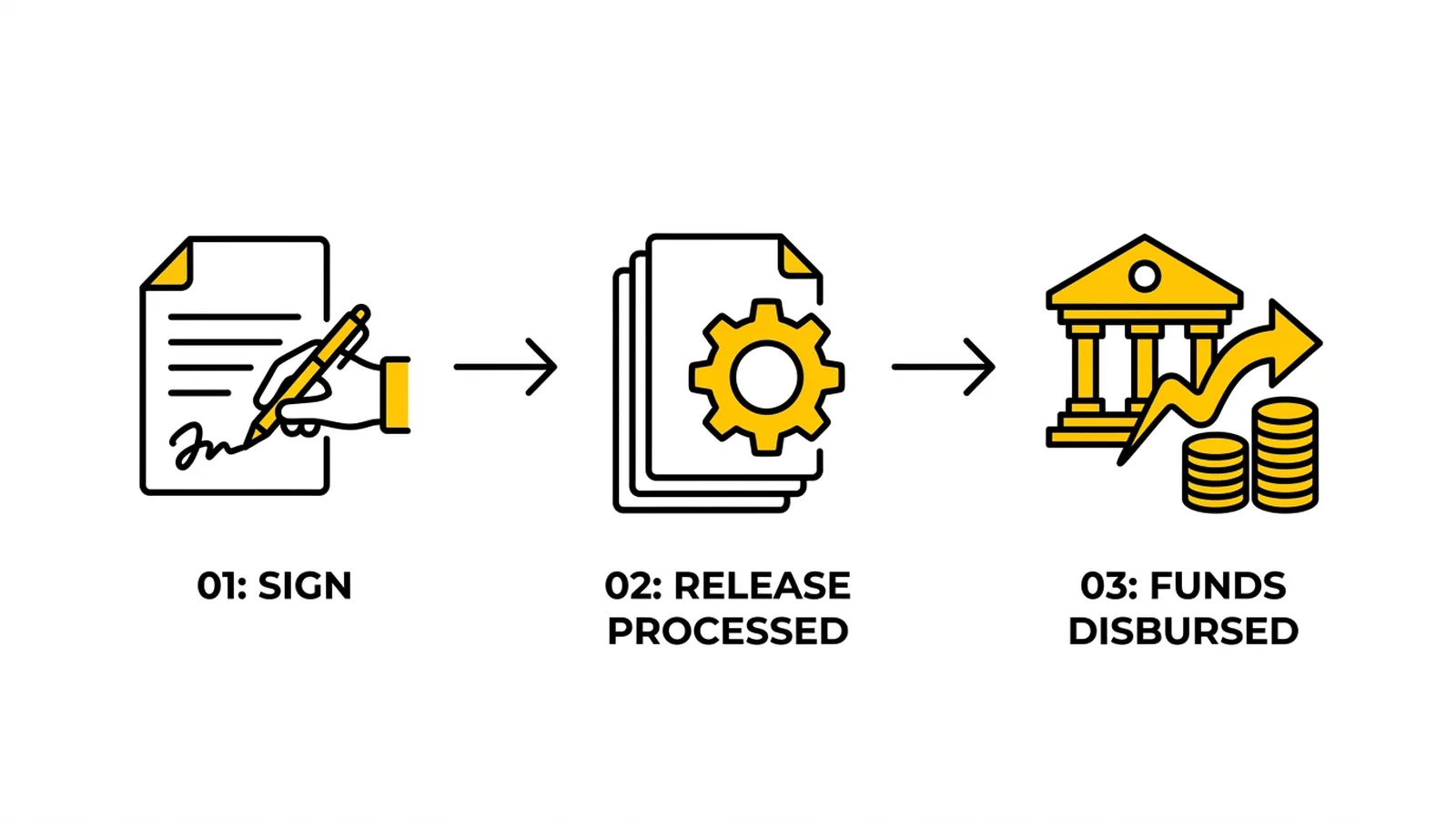
One last thing, and it's the one that makes all of the above matter. People ask whether a settlement can be reopened later. Usually not. Once you sign a release of liability or a settlement agreement, that usually settles that claim for good.
There are some very specific exceptions that apply, which I have not seen in more than 13 years of practicing ever truly be successful. You'd have to prove fraud on behalf of the insurer or the person who coaxed you into signing, plus very specific defects that are rare and hard to prove.
So before you sign, confirm the full spectrum of your injuries. That includes any potential future treatment you might need and what it's going to cost. You get one shot, and once you sign it's permanent. You may feel like you're in a hurry, but sometimes these injuries take months and months to kind of reveal themselves.
Common Questions
- Are crash settlements taxable in Texas?
- Usually not. Compensation for a physical injury is typically tax free, and Texas has no personal income tax on top of that. But certain portions, especially amounts allocated to lost wages or to interest that accrued on the settlement, can be taxable in some circumstances. That's why it's worth understanding how your settlement is allocated between its pieces before you sign. I'm not a CPA, and yours should look at it.
- What is a hospital lien and how does it affect my settlement?
- A hospital lien, governed in Texas by Property Code Chapter 55, lets a hospital that treated you after a crash place a claim against your eventual settlement. If it was perfected, it has to be paid before you get paid. Hospital liens, like subrogation claims from health insurers, are negotiable, and negotiating them down is a routine part of closing a case properly.
- What is subrogation in a car accident settlement?
- Subrogation is the right of an insurer that has already paid money on your behalf, usually a health insurance company, to be reimbursed out of your settlement. Most policies have a clause that allows it. Like hospital liens, subrogation claims are negotiable, and the number that matters to you is the net amount left once they're resolved.
- Do I need a lawyer just to handle the tax and lien side of a settlement?
- Not for the tax piece, since a CPA is the right person for that. But negotiating hospital liens and subrogation claims down is work I handle as part of your case, because those negotiations run on the same medical records and case file I'm already holding. It's the same records, the same file and the same negotiation, so it makes very little sense to split it off.
- Can a hospital lien take my entire settlement if my medical bills are large enough?
- It can get close on a case with heavy treatment and thin coverage, and I won't tell you otherwise. What protects you is that the lien gets negotiated before your case closes. Priority is not the same as fixed. That's why the net amount you walk away with, rather than the size of the lien on paper, is what we're working toward at the end.
Chapter Reflection
The number an insurer agrees to pay and the number that reaches your bank account are two different numbers. Almost everything sitting between them is negotiable, and we negotiate it every week. So when you're deciding whether an offer is acceptable, ask what you net, not what the headline says. That is the number that has to carry you through whatever comes next. Which leaves one question this whole book has been circling: whether having someone do all of this for you changes the math enough to be worth it.